Well worth reading, & explains why I keep telling you that you will need to get out of the city if TSHTF.
https://bushcraftusa.com/forum/threads/selco-the-5-things-that-will-surprise-you-most-when-the-shtf-article.253881/
Showing posts with label going bush. Show all posts
Showing posts with label going bush. Show all posts
Wednesday, July 3, 2019

Tuesday, June 19, 2018
Survival Equipment for Beginners.

Survival Equipment for Beginners.
Advice based on experience.
1) When packing a
back pack for the trail, there must be a compromise between two principles;
Minimum weight, & Maximum self reliance.
2) Don’t waste
money on modern gadgets that are NOT sustainable. Most of these gadgets are
designed & sold for one purpose only, to make money for the designer &
the seller.
3) When purchasing
survival gear, think practically, what are the items you actually NEED.
4) Blades: Bowie
knives & stilettos are all very nice, but think about what you blades will
be actually mostly used for. Second hand blades in good order are just as good
as modern blades if not better. 19th century & early 20th
century butcher knives can often be found in second hand & junk shops. A
tomahawk with a round or oval tapered eye is more versatile than a hatchet or a
machete, but if you can’t find or afford a tomahawk, then pick up a light
hatchet to get you by. I carry three knives & a tomahawk.
5) A bird in the
hand is worth more than two in the bush. You will need a hunting, defence
tool(s). You are better off with a
flintlock pistol in your hand than a 9mm Glock still in the gun shop!
Personally I carry a flintlock longarm & pistol from choice, but get what
you can afford for now, even if it is only a single shot .22 rifle.
6) When planning
your equipment always think long term. We can’t possibly know what is going to
happen in the future.
7) Your survival
kit should be your back pack/knapsack; all of your gear should be your survival
kit, no fancy extras, just the basic needs that will keep you alive & in
reasonable comfort.
8) Learn primitive
living skills. The more skills you have, the better chance you have of
surviving.
9) Practice makes
perfect: Or at least as perfect as an individual can get. Use your gear, trek
& camp & get used to using your equipment out bush.
10)Fire: Being able
to make fire under all conditions is very important, so learn all you can about
kindling, plant & fungi tinders & making fire. Learn how to char
tinders directly in the fire & use the tinderbox to smother the glowing
embers. I suggest you purchase or make yourself a flint & steel kit; fire
steel/striker, tinderbox, & a piece of siliceous rock to strike the sparks
from the steel. A good back up skill is being able to make fire with a fire-bow
which you can make in the bush.
11) Don’t rely on
finding natural shelters, & don’t waste money on a modern tent. Get
yourself a piece of canvas or oil cloth, it is more versatile than a tent,
easier to erect, & you can take advantage of a fire for warmth &
cooking without having to go out in the rain or snow.
12) A good pure wool
blanket(s) is better than a sleeping bag. Sleeping bags in general will not
keep you warm if they get wet, & they are difficult to get out of in an
emergency. A good new blanket will always be better than a good old blanket,
but two second hand wool blankets work just fine. You can also cut a blanket to
make a “half-blanket” to use as a cape around your shoulders in winter, just as
any blanket can also be used as a Matchcoat or a Great coat without any cutting
or sewing.
13) Footwear: Hiking
boots are good, but they can be noisy in the woods, difficult to repair &
impossible to replace in the bush. If you make yourself a couple of pairs of
center seam Woodland Indian moccasins (one pair to wear & the other pair to
carry spare), then you will have the pattern to make new ones on your feet.
They are light, leave less sign than a modern boot, easy to make a makeshift
sole repair on the trail, easy to repair & replace. If you want to use your
hiking boots, do so, but I suggest you make at least one pair of moccasins
& carry them with you tied to your pack.
14) A good way to
carry extra warmth with you is to roll up some spare warm clothing in your
blanket roll. I carry a spare wool shirt & wool waistcoat which I put on
over my other clothing on cold nights.
15) Make sure you
carry a good modern medical/first aid kit. This is the only piece of modern
equipment that I carry with me. Learn how to use it, learn first aid. There are
first aid courses available in all cities.
16)Running a trap
line. This is the most efficient way to make meat, carry your hunting tool with
you & check the line every morning. Don’t carry any traps with you except
small game snares & perhaps a rope for a large game snare. Learn how to
make cordage from plant fibers’ & make your own traps.
17) Water is
probably the heaviest thing you will be carrying, but always carry a water
bottle/flask or canteen. I try to follow a water course when I can to make sure
I always have water, but you never know when you may not be able to find any
water.
18) Trail foods: Dry
foods are lighter than canned foods. Always carry some foods that do not
require cooking just in case it is not safe to make a fire.
19)Carry a light
trade kettle or billy kettle. These are easy to make from a tin can & a
piece of wire for a bail. These are good for cooking in, boiling water for
sterilizing or making a hot drink, & for collecting rain water to top up
your water bottle.
20)
Carry some form of water filter. I carry linen &
cotton water filter bags for straining dirty river water into my kettle for
boiling.
21) Fishing Tackle:
Carry a couple of lines & some spare hooks. You never know when you might
get a chance to do some fishing.
22)
A sewing kit is a must & it is pretty inexpensive to
put together. This will be needed for repairs to your clothing, footwear &
perhaps your shelter & back pack.
23)
Whetstone for sharpening your blades. You can often find
these second hand, but you can also find suitable stones in a creek or river
bed.
24)
Eating utensils.
You already have a knife, so all you need is a light wooden spoon.
Keith.
Saturday, June 16, 2018
Equipment: Comfort & Ease of Living.

Equipment: Comfort & Ease of Living.
Choosing the right equipment for wilderness living is important,
especially if you are carrying that equipment on your back. It is important to
choose equipment that is sustainable, which many modern survival gadgets are
not. So you really do need to give it some thought before you start collecting
gear.
The ease & comfort that you achieve in your wilderness survival
depends solely on the equipment you choose. Your survival per se depends mostly
on your wilderness living skills. If you have the right skills, you can survive
in the wilderness without any bought equipment, BUT, it will be a hard life
& a lot of work. Choose the wrong equipment, equipment that is not
necessary & not sustainable, & you will finish up living a Stone Age
lifestyle!
Here are some questions you need to ask yourself before purchasing or
choosing items of equipment:
Is it sustainable? If it breaks can I repair it easily? Do I really
need this or am I choosing it because it looks cool? What purpose will this
serve? Can I use it for more than just one task? Is this suitable for the
environment I am expecting to live in; example, jungle or forest/machete or
tomahawk? (a tomahawk is more versatile than a machete). How versatile is this
shelter option? If I choose a sleeping bag over wool blankets will the bag keep
me warm when wet? In an emergency how easily can I escape from a sleeping bag?
Do I need a firearm primarily for defence or hunting? How long will the
ammunition last if I use a modern firearm for defence & hunting? Am I
likely to get into a firefight? Will I be travelling alone? If I am travelling
with a partner, how can I divide some of the equipment to our best advantage?
Sunday, May 27, 2018
Bugging Out. Facing Facts. What Will It Take?

Facing Facts. What will it take?
I haven’t written a list to work from here, just thoughts as they occur,
so I suggest you jot down any of your own thoughts when reading this & use
them in your reply to this post. There is bound to be things that I have missed
& it is good to get other people’s perspective.
Okay, let us assume something has gone down & you have to leave
your present abode & go bush, what can you expect to have to do to stay as
safe as possible under the circumstances. For one you will have to stay alert
all the time, even if you are at your retreat or you’re off the grid home, your
life will be under threat 24/7! This can be very stressful, but you will not be
able to drop your guard unless you are in a secure place & there are others
taking their turn on watch.
If you are on the trail, there will be no lighting of fires, so no
warmth from fire & no cooking, no warm food. This means you will have to
carry foods that do not require cooking.
Shelter: You will not be erecting a shelter, come rain or snow you cannot
afford to make yourself visible. Tents are an absolute NO, they stand out too
much, camo pattern included. So what will you have to do? You will have to roll
yourself up in a canvas or oil cloth somewhere hidden by brush, rocks, in a
hollow log or a hollow tree or in low ground. Bear in mind that anyone else on
the trail will also be looking for likely places to camp so hide yourself well.
If there are two or more of you then take turns at keeping watch, but the watch
will still have to be well hidden.
Don’t zip yourself up in a sleeping bag, you can’t protect yourself
stitched up in a bag, & you can’t move fast enough from inside a bag. Pure
wool blankets are the best choice. Keep weapons close to hand so they can be
used in an instant. You don’t have to wear camo clothing, but you will need to
stick to earth colours, no bright coloured clothing!
When you stop for a break on the trail DO NOT take off your pack!
Stay as you are so that you are ready to move or run at a moment’s notice. You
may be able to throw yourself into a hidden place, in which case you don’t want
your pack left sitting in the open. If you have to run for it, you cannot
afford to leave your pack behind, & you will not be able to move as well carrying
your pack in your hand as you would if it were on your back.
Animal trails are the easiest way to travel, but if you are wearing
modern footwear you are likely to leave sign. Moccasins can leave sign too, but
the print does not show as clearly as the tread on a modern boot & may go
unseen by all but a trained tracker. If you are wearing modern boots with a
tread, stay off clear ground trails. If you are in a group & crossing open
ground, spread out so you do not leave a clear trodden trail.
If you can follow a water course, this is a good idea. This will mean
you have a constant source of drinking water & the chance of trapping or
hunting game. Always boil the water if you can, with a no fire rule early on
this will not be possible, but there are tablets you can use to purify water.
Take care when collecting water not to leave any boot prints in the
mud or on the bank.
Toilet: If you were pursued by military with dogs, then your best bet
is to defecate in a plastic bag, add a rock, tie the bag well & drop in a
river or creek. Other than this choose a place well away from the trail &
cover it well. Smell & or buzzing flies are a dead giveaway that someone
has defecated close-by!
Foods: for trail food I suggest a mix of nuts, sunflower seeds,
raisins or sultanas & chocolate bits in a bag. This will keep you going on
the trail, it is nutritious & tasty & it may be the only comfort you
will get for the first few days.
DO NOT weigh yourself down with modern gadgets that are going to self
destruct with time! You have more important things to carry such as medical
supplies, ammunition, water & food. It will be quite a while before you can
afford to hunt or trap & cook game, you may forage along the way but ONLY
along your path, do not stray! So take plenty of dried foods & foods that
you can eat without cooking.
Can anyone add more information or suggestions here?
Keith.
Sunday, September 10, 2017
Living Off Grid. Rainwater Collection & Storage.

We have 4 rainwater tanks for the main house (Linstock), the main
house garden & the main house outside laundry. The same 5000 gallon tank
that feeds the outside laundry also feeds Elm Cottage via a 12 volt pump under
the cottage. Both houses are solar powered.
The lower cement 5000 gallon water tank is fed from the roof of the main house via down pipes from both the front & the rear of the house. The water from this lower tank is then pumped up to the higher tank which gravity feeds the main house.
The lower cement 5000 gallon water tank is fed from the roof of the main house via down pipes from both the front & the rear of the house. The water from this lower tank is then pumped up to the higher tank which gravity feeds the main house.

This pump is also a fire pump, it draws water from the stop cock on the side of the lower tank & pumps it up to the higher tank via a pipe that runs underground.

This image shows the two "first flush" pipes on the lower tank. Any dirt on the roof or in the gutters is washed into these two pipes. When full, a ball float in the pipe rises to the top closing off these tow pipes & allows the rest of the water to flow into the tank. Over time, the water in these pipes is supposed to slowly run out via the hoses at the bottom, but invariably the small hole blocks with dirt, so every now & then I remove the bottom of the pipes, drain & wash out the filters.


This is the new
5000 gallon poly tank that feeds the outside laundry, & Elm Cottage. This
tank is fed from the roof of Elm Cottage, but the ground close to the cottage
was too soft to provide a firm base for the tank, so we placed it on higher
ground. Again this meant that the tank was too far away to use overhead down
pipes, so again the pipe to the tank from the cottage roof was placed
underground then back up & into the top of the tank. The other pipe you can
see is an overflow pipe which I have run into a water butt.

Cattail Pond is actually a dam we had put in to collect & store more water from the header stream in Butterfly Valley. It also enables us to keep fish for food. Cattail Pond feeds the gardens at both houses via another fire pump at the side of the dam.
Keith.
Keith.
Wednesday, August 30, 2017
Meet the Aussie woman who hasn't spent a cent in two years

This is Jo's bedroom. It's simple but it's all she needs. Source:
Today Tonight.
Saturday, June 17, 2017

Wednesday, May 31, 2017
Saturday, April 22, 2017
Darwin couple rescued from WA desert. What To Carry With You When Going Bush.

The Darwin couple were saved from WA's Gibson Desert. Picture: AAP
Friday, January 6, 2017

Wednesday, November 30, 2016
Advantages of a Flintlock Muzzle-loader for long term wilderness living/survival.


Advantages of a Flintlock
Muzzle-loader.
1)
Ammo is less expensive than a modern equivalent caliber firearm.
2) The smoothbore is very versatile, being able
to digest round ball, bird shot, & buckshot, or any combination of two of
these (can also use minies).
3) The fusil is lighter to carry than a modern
equivalent sized gun.
4) You can vary the load if needs be.
5) The smoothbore will digest other projectiles
besides lead.
6) Lead can be retrieved from downed game &
remoulded with a simple mould & lead ladle. This means that you can carry
less lead, & more of the lighter gunpowder.
7) You can make your own gunpowder.
8) You can use the lock to make fire without the
need for gunpowder.
9) You can use gunpowder for gunpowder tinder
fire lighting if needs be.
10)
IF the lock should malfunction
(these are very robust & it is not likely) you can easily repair it if you
are carrying a few spare springs & a few simple tools.
11) If you do not have any spare parts & the
lock malfunctions, you can easily convert it to a tinderlock or matchlock &
continue using it.
12)
You do not need a reloader, brass shells, caps, or primers. The latter
have been known to break down in damp conditions or if they are stored for too
long.
13)
Wadding for ball or shot is
available from natural plant materials or homemade leather or rawhide.
14)
Less chance of being affected by future ammunition control legislation.
15)
Gunpowder is easily obtainable providing you have a muzzle-loader
registered in your name regardless of caliber (NSW)
16)
A .32 caliber flintlock rifle is
more powerful than a .22 rimfire, less expensive to feed, more accurate over a
greater distance, able to take small & medium sized game, & other than
not being able to use shot (unless it is smoothbore), it has all the attributes
of the other flintlocks.
17)
Damage from a .62 caliber-.75 caliber pistol or long arm is in the
extreme. Wounded prey is unlikely to escape.
18)
By using buck & ball you are
unlikely to miss your target. This load is capable of taking out more than one
target.
19)
There is less kick-back to a
muzzle-loading gun.
20)
Antique Flintlock muzzle-loading
guns do not require a license, registration, or a permit to purchase in NSW
Australia.
Thursday, October 13, 2016
Survival Vehicle Choice.

Any vehicle in an emergency is better than nothing at all, but if you want the most practicle & advantages of vehicles, then you need to get a good 4WD (four wheel drive). I had three 4WDs when I lived in the Territory, we lived off grid, & it was the only way to get around. We had two Toyota Land Cruisers, a short wheel base & a ute, & we had a little Suzuki. I would still have the SWB, but it was stolen from our property whilst we were away looking for land interstate.
Now we live in New England NSW, & up until now we have had a Nissan X-Trail SUV. However, the wading depth (depth of water it can drive through) on this vehicle is only 400mm. Of late it has been very wet here, I would say the wettest we have experienced in the past 30 years. Weather conditions are changing!!! We have a creek to cross to get into town, as again we are living off grid in a forest. The alternate rout out & back in if the creek is in flood is all dirt & it too is subject to a lot of water.
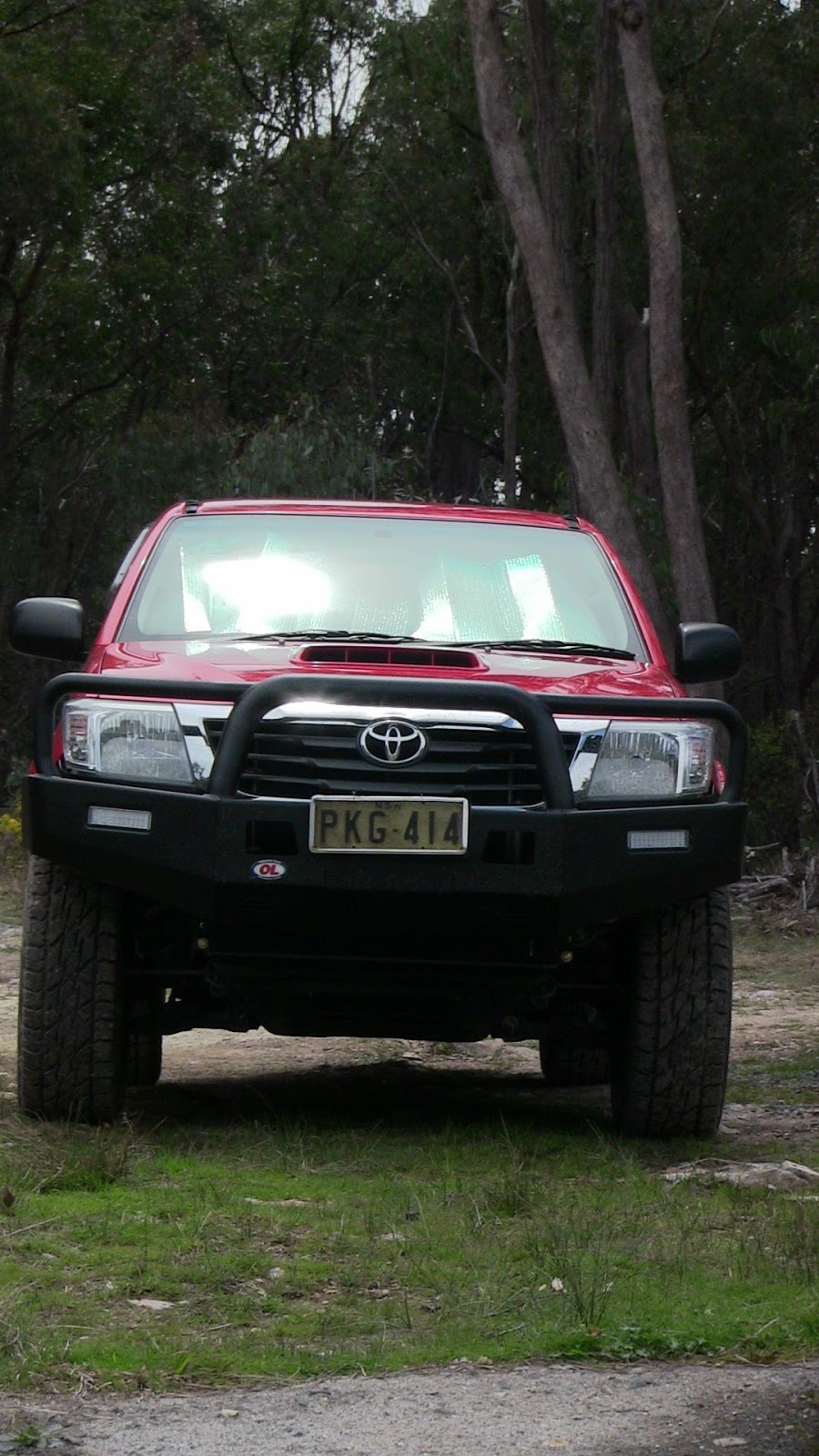
So, we decided to get a full blown 4WD, we do already have a 4WD unregistered property vehicle (Lada), but it can not be used on the road. We sold our SUV to my Eldest son & his family for an affordable price. It is better than the ordinary sedan that they had. What we purchased is a Toyota Hilux twin cab diesel ute with a canopy on the back & a bull bar. We also added a rear view camera, & we are getting LED bar lights fitted to front & rear. So far my wife is very pleased with this vehicle, though it is larger than she has been used to driving. I love it, it gives me a feeling of security knowing that my wife can get home at night no matter which rout she has to take.

The wade depth on this Hilux is 700mm with standard suspension.


This is my youngest son's Nissan Triton which I believe has a wading depth of 500mm. This vehicle is a good less expensive choice in 4WDs.

My Russian Lada 4WD with wide wheels & two spares on the roof.
We do not expect to ever have to evacuate our forest home, we have enough people to be able to defend it in a shtf situation short of a foreign invasion. But if we should have to leave, I feel sure the vehicles we have will get us to where we are going.
Subscribe to:
Posts (Atom)