Showing posts with label vehicles. Show all posts

Monday, July 2, 2018

EMP Effects on Vehicles Report.


We tested a sample of 37 cars in an EMP simulation laboratory, with automobile vintages ranging from 1986 through 2002. Automobiles of these vintages include extensive electronics and represent a significant fraction of automobiles on the road today. The testing was conducted by exposing running and nonrunning automobiles to sequentially increasing EMP field intensities. If anomalous response (either temporary or permanent) was observed, the testing of that particular automobile was stopped. If no anomalous response was observed, the testing was continued up to the field intensity limits of the simulation capability (approximately 50 kV/m).
Automobiles were subjected to EMP environments under both engine turned off and engine turned on conditions. No effects were subsequently observed in those automobiles that were not turned on during EMP exposure. The most serious effect observed on running automobiles was that the motors in three cars stopped at field strengths of approximately 30 kV/m or above. In an actual EMP exposure, these vehicles would glide to a stop and require the driver to restart them. Electronics in the dashboard of one automobile were damaged and required repair. Other effects were relatively . Twenty-five automobiles exhibited malfunctions that could be considered only a nuisance (e.g., blinking dashboard lights) and did not require driver intervention to correct. Eight of the 37 cars tested did not exhibit any anomalous response.
Based on these test results, we expect few automobile effects at EMP field levels below 25 kV/m. Approximately 10 percent or more of the automobiles exposed to higher field levels may experience serious EMP effects, including engine stall, that require driver intervention to correct. We further expect that at least two out of three automobiles on the road will manifest some nuisance response at these higher field levels. The serious malfunctions could trigger car crashes on U.S. highways; the nuisance malfunctions could exacerbate this condition. The ultimate result of automobile EMP exposure could be triggered crashes that damage many more vehicles than are damaged by the EMP, the consequent loss of life, and multiple injuries.

Thursday, March 8, 2018

Survival Vehicles. Another 4x4.


We have added another 4x4 truck to our family vehicles. This one is a Triton diesel single cab tray back. It has wide wheels, bull bar, tow bar, light bar, racks, & a long range fuel tank. Today I secured my high lift/Wallaby jack to the back of the cab & I secured the winch cable on the opposite side. The winch is in the truck tool box on the side along with a tool bag, wedges for wood cutting & an axle stand.

Monday, March 5, 2018

Newly Expanded Australian Survival Forum.


The Survival Connection.
This is a survival board on our groups forum. Many of our members joined our 18th century Living History forum because they had a strong interest in survival & prepping, so we also added The Survival Connection board.
This board is like a separate forum, it is not just for primitive gear & primitive skills, it covers anything & everything in regards to survival.

The Survival Connection Forum: http://neclhg.freeforums.net/board/18/survival-connection

Saturday, May 13, 2017

Survival Updates.

All three registered 4WDs were home today so I thought I would take a photo.

Start of the footings for the new laundry right behind the power shed.

A new solar battery bank, gel 6 volts adding up to 24 volts DC and converted to 240 volts AC.


Tuesday, April 18, 2017

Personal and Family Preparedness.


Personal and Family Preparedness.
Personally I don’t see one thing as being more important than another. There is no point in prioritising shelter if you are unable to protect & defend. But for the purpose of this article, I will start with my home & work my way through other priorities.
We have two dwellings, a main house & an old cottage. Both are situated in a forest that we own. We do have fire breaks, but this winter we will be widening those breaks because of the new threat posed by global warming. On the main house we have two 5000 gallon cement water tanks, plus another 1000 gallons in a polly tank for the garden. We have two fire pumps, one on the lower cement tank, & one down at Cattail Pond. The Cattail Pond pump can pump water up to the main house & the cottage for gardens & fire fighting. The gardens supply us with all our vegetable needs for the house & the chooks, but we also keep on hand a good supply of dried, bottled & canned foods. The chooks are kept mainly for eggs.
The main house & the cottage are both off grid & self-sustainable with grey water systems & composting toilets. The cottage has two 1000 gallon water tanks but we will be adding another larger tank soon. Heating of both houses & hot water is provided by wood burning stoves, plus a wood heater in the main house & a large open fire in the cottage. Cooking of course is also done on the wood burning stoves & the forest supplies all our firewood. 240 volt Electricity is supplied by solar panels & batteries.
We have four 4WDs, The Lada is only used on the property, but the Hilux & Triton diesels are registered for the road, as is the X-Trail SUV. If we ever have to leave here, the whole family can just fit in the Hilux & the two Tritons with all our equipment. Every family member that is able to carry has their own pack & arms. I am a primitive skills instructor & I have passed my skills on to my three sons. Arms are a mixture of modern breech-loaders, muzzle-loaders & traditional bows. Our equipment is all 18th century except for medical supplies & some of the water containers. We do not expect to have to leave our forest home as we have plenty of people & arms to protect what we have, but we are prepared to leave if we consider it necessary.
Individual equipment is much the same for everyone with a few exceptions including arms, types of packs, clothing. & personal items.
Equipment List:
.62 cal/20 gauge flintlock fusil. 42 inch barrel.
.70 caliber smoothbore flintlock pistol.
Gun tools and spare lock parts.
Shot pouch and contents.
Leather drawstring pouch of .60 caliber ball (in knapsack).
Powder horn.
Ball mould and swan shot mould.
5 Gunpowder wallets
Lead ladle.
Butcher/Hunting knife.
Legging knife.
Clasp knife.
Tomahawk.
Fire bag.
Tinderbox.
Belt pouch.
Fishing tackle in brass container.
Two brass snares.
Roll of brass snare wire.
Knapsack.
Scrip.
Market Wallet.
Tin Cup.
Kettle.
Water filter bags (cotton & linen bags).
Medical pouch.
Housewife.
Piece of soap and a broken ivory comb.
Dried foods in bags.
Wooden spoon.
Compass.
Whet stone.
Small metal file.
Oilcloth.
One blanket (Monmouth cap, spare wool waistcoat and wool shirt rolled inside blanket).
Two glass saddle flasks.
Length of hemp rope.
Bottle of rum.
Basic list of what I carry. This list is made up from items that we know were carried, from items that my research has shown were available, & from items that have been found, such as the brass snare wire. I am not saying every woodsrunner carried all these items, but I am saying that some woodsrunners may have carried all these items. From experimental archaeology results in historical trekking, I think the items I have chosen are a reasonable choice for any woodsrunner that is going to live in the wilderness for a year or more.
Skills: All adult male family members have these skills. The only reason the women don’t have these skills is because they have not shown any interest. Two of the women can use a gun & one of the girls has her own bow. One of our family is a trained nurse & others have skills such as cooking, clothing manufacture, weaving & gardening.
Skills List:
Fire-bow Flint & steel fire lighting
Wet weather fire lighting
fire lighting
Flintlock fire lighting
Flintlock use, service & repair
Marksmanship with either gun or bow.
Field dressing & butchering game
Blade sharpening
Tomahawk throwing
Making rawhide
Brain tanning
Primitive shelter construction
How to stay warm in winter with only one blanket
Cordage manufacture
Moccasin construction and repair
Sewing
Axe and tomahawk helve making
Fishing
Hunting
Evasion
Tracking
Reading sign
Woods lore
Navigation
Primitive trap construction & trapping
Open fire cooking
Fireplace construction
Clothing manufacture
Drying meat & other foods
Knowledge of plant tinders & preparation
Knowledge of native foods & preparation
Knowledge of native plants in the area and their uses for other than tinder and food.
Scouting/Ranging.
Basic first aid.
Finding and treating water.
General leather work.


Saturday, April 8, 2017

Our Family's Bug Out Vehicles.

I have been without a vehicle of my own for some time now, this was not good because it meant that when I was alone at home I had no transport in case of fire or accident. The X-Trail SUV we had we sold to one of our 3 sons. My Volvo wagon I gave to another son. My Youngest son bought a Triton Dual Cab Diesel 4WD with a drop side tray.
We replaced the X-Trail with a Hilux Dual Cab Diesel 4WD with a hard canopy. I just bought myself a Triton Dual Cab 4WD Diesel ute, and I am very pleased with it so far. We also have a property vehicle, a 4WD Lada, which we use only on the property for transporting fire wood and generally getting about, mending fences.

The X-Trail and the Volvo Wagon.

My youngest son's Triton.


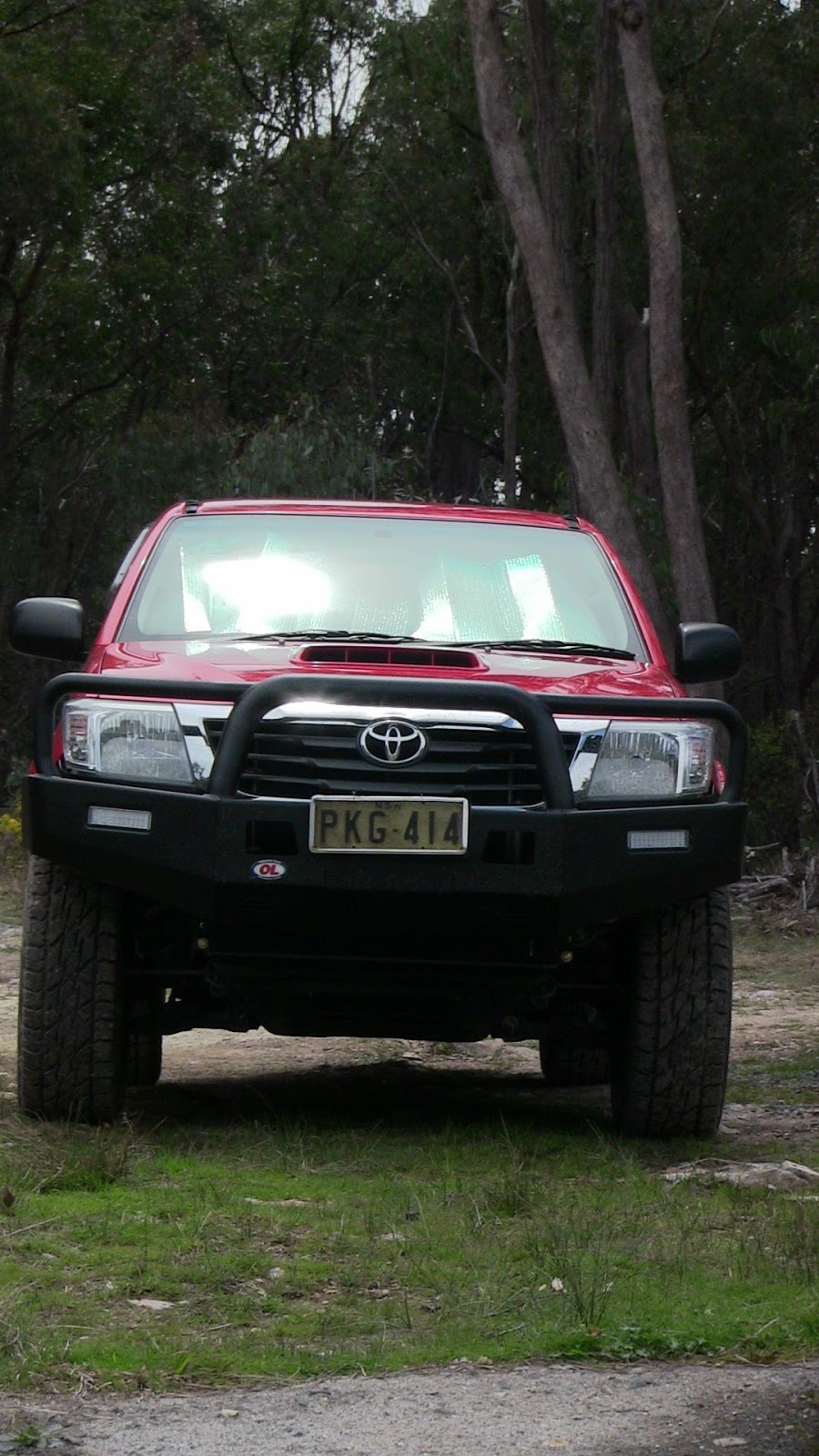
Our/my wife's Hilux.


Our/my Triton.

Our indestructible go anywhere Lada.

We can just fit the whole family in the Hilux and the two Tritons, plus of course all our gear should we have to abandon our home in the forest. I don't see that happening, but it is nice to know that we have reliable 4WDs just in case.

Thursday, October 13, 2016

Survival Vehicle Choice.


Any vehicle in an emergency is better than nothing at all, but if you want the most practicle & advantages of vehicles, then you need to get a good 4WD (four wheel drive). I had three 4WDs when I lived in the Territory, we lived off grid, & it was the only way to get around. We had two Toyota Land Cruisers, a short wheel base & a ute, & we had a little Suzuki. I would still have the SWB, but it was stolen from our property whilst we were away looking for land interstate.

Now we live in New England NSW, & up until now we have had a Nissan X-Trail SUV. However, the wading depth (depth of water it can drive through) on this vehicle is only 400mm. Of late it has been very wet here, I would say the wettest we have experienced in the past 30 years. Weather conditions are changing!!! We have a creek to cross to get into town, as again we are living off grid in a forest. The alternate rout out & back in if the creek is in flood is all dirt & it too is subject to a lot of water.
So, we decided to get a full blown 4WD, we do already have a 4WD unregistered property vehicle (Lada), but it can not be used on the road. We sold our SUV to my Eldest son & his family for an affordable price. It is better than the ordinary sedan that they had. What we purchased is a Toyota Hilux twin cab diesel ute with a canopy on the back & a bull bar. We also added a rear view camera, & we are getting LED bar lights fitted to front & rear. So far my wife is very pleased with this vehicle, though it is larger than she has been used to driving. I love it, it gives me a feeling of security knowing that my wife can get home at night no matter which rout she has to take.

The wade depth on this Hilux is 700mm with standard suspension.


This is my youngest son's Nissan Triton which I believe has a wading depth of 500mm. This vehicle is a good less expensive choice in 4WDs.


My Russian Lada 4WD with wide wheels & two spares on the roof.

We do not expect to ever have to evacuate our forest home, we have enough people to be able to defend it in a shtf situation short of a foreign invasion. But if we should have to leave, I feel sure the vehicles we have will get us to where we are going.