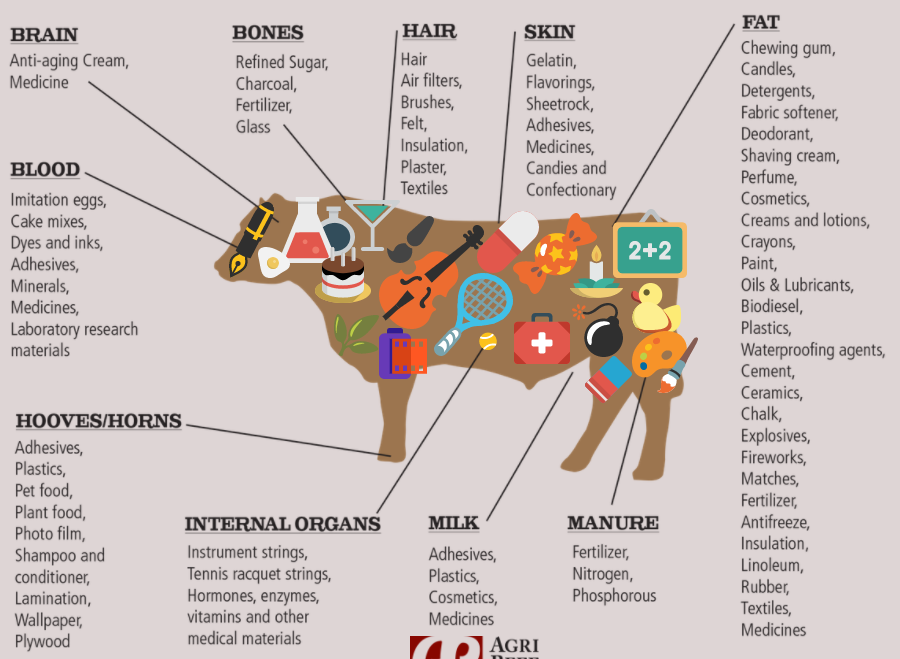
Don't forget the brains can be used to brain tan animal skins. Bones can be used to make tools, spear & arrow points. Horns for containers; powder horns, tinder horns, grease horns, cups & other vessels. Tendons for bow strings & cordage. The hide for making many leather items & for making hide glue.
Showing posts with label clothing. Show all posts
Saturday, September 17, 2016
Animal Parts Use Image.
Labels:
18th century,
animal parts,
clothing,
containers,
DIY,
long term wilderness living,
making,
prepping,
primitive skills,
survival. preppers,
tools,
vessels
Location:
Australia
Saturday, August 6, 2016
Failed New Australian Survival Forum. But Old One Still Exists.
Because I was not satisfied with present survival forums I attempted to start one myself. This failed miserably. Simply put not enough people were really interested in the forum, even though I bent over backwards to make it interesting & supplied plenty of choices on subjects. It was primarily a Primitive Survival forum, although modern equipment was not left out. Even so I think that most survival preppers & survivalists are not really serious about survival, they like the idea, but are not prepared to go the extra distance. Camping & playing at survival is fun, but this will not get you through a serious shtf situation.
If you can't think of anything more important to carry than modern battery operated equipment & multi-tools along with a ferocerium rod for fire lighting, then in a long term wilderness survival/living situation you are going to be in a lot of trouble. How long do you think this modern equipment will last? What will you do when your hiking boots come apart at the seems? What you need is equipment & methods that are sustainable & to a point renewable, & you need to have skills.
Modern medical supplies & equipment are a priority, no argument there. Modern firearms if they are only used for defence & you can afford to carry them without compromising your ability to hunt are also fine. But if you are only going to carry a modern firearm for hunting & defence, then you will not only need to carry a lot of ammunition, but you will also be putting all your eggs in one basket!!!
If you are serious about survival, if you think there is a possibility that a TEOTWAWKI situation may arise in Australia, then I suggest you check out our forum "The Survival Connection" on our group's 18th century Living History forum at: http://eighteenthcenturylivinghistory.freeforums.org/ We have some good people on this forum, knowledgeable people from all over with whom you can share your knowledge & learn from.
Regards, Keith.
Labels:
Australia,
clothing,
cooking,
firearms,
forum,
long term wilderness living,
preppers,
prepping,
primitive skills,
renewable,
survival,
survivalists,
sustainable,
tools
Location:
Australia
Thursday, November 6, 2014
Prepping For Survival PART TWO.
Knapsack with a spare pair of moccasins.
Prepping For Survival
PART TWO.
Clothing: Your clothing will not last for ever, so in
this case sustainable means being able to replace it, plus hard wearing.
When I mention wearing
18th century style clothing, I suddenly lose people’s interest. But
let me ask you this, what exactly do you intend to wear when your camouflage clothing
wears out? What do you intend to wear on your feet when your present footwear
breaks down?
Some of those that
agree still don’t see the need to make this clothing before their present
clothing wears out. But think how much easier it will be to just replace your
present clothing if you have it already made. The other plus is having made
this clothing, you now know how to do it. The moccasins on your feet are also a
pattern for your next pair, to say nothing of the fact that it will be
difficult for anyone to track you when you are wearing moccasins instead of
heavy treaded boots!
You don’t have to wear
knee-breeches, you can just wear an easily made breechclout. Leggings are
practicle and made of leather they are very good protection for the legs.
Period shirts are very roomy and therefore hard wearing with no stress points.
A waistcoat is not heavy but adds warmth to the upper body. The frock has been
in use for hundreds of years because it is a practicle garment and protects
your other clothing. A neckerchief is practicle and versatile, and a broad
brimmed hat is excellent for Australian weather conditions.
With a wool shirt,
wool waistcoat, wool Monmouth cap and mittens rolled up in your blanket roll,
you will be warmer at night. In extreme cold climes you can double up on this
clothing on cold nights. This clothing goes on top of the clothing that you are
already wearing. Remember, do not go to bed if your clothing is wet or damp,
take it off and dry it by the fire, then put it back on. If it is not safe to
make fire, then take the damp clothing off and replace it with the dry clothing.
A half-blanket can be
worn in cold weather worn as a cape. The blanket can also be worn as a
Matchcoat. I suggest that unless travelling by water, that you don’t roll your
blanket in your oilcloth. In this way your oilcloth can be retrieved quickly in
a sudden downpour and can be used to cover yourself and the gear you are
carrying.
With this kit, and the knowledge I have, I can survive in the wilderness for years.
Any questions?
Carrying a half-axe through the ties on my blanket roll.
Using the half-blanket.
The frock.
Long waistcoat and leather leggings.
This belly-box is for carrying paper cartridges. Using paper cartridges makes it much faster to load.
I use a series of cotton and linen cloth bags for cleaning water before boiling.
One of my five greased leather gunpowder bags.
Additional tools if you have a partner or are a member of a group, may include:
A small light shovel head. The stail or handle to be made when you reach your destination.
Rope trail snares, the lower one I made/corded myself.
Heavy duty framed 17th century reading glasses.
Pure wool handmade Monmouth cap.
Typical 19th century butcher knife of the type found in second hand shops. This one would make a great hunting knife. Cost, $7.00.
Optional short light hunting sword for close quarters self-defence.
Small auger and gimlet.
Larger auger.
Felling axe with a light head and a long straight helve. Two fascine knives or bill hooks, an adze, a half-axe and the author's tomahawk.
A small light mattock head. Again, the handle can be made later, or it could be carried by someone with the handle for use as a weapon. The same applies to any gardening tools you may decide to carry in your group.
Labels:
clothing,
gear,
kit,
long term wilderness survival,
preppers,
prepping,
survival,
survivalists,
tools
Location:
Australia
Tuesday, August 19, 2014
What Does It Take To Survive Long Term In The Wilderness.
What Does It Take To Survive Long Term In
The Wilderness.
I have been out bush with hunters using
modern firearms & muzzle-loading arms, & for this day & age I would
say that they would be classed as reasonable hunters, well some of them anyway.
But in a SHTF situation where you may have no idea how long you will have to
live in the bush, frankly these hunters don't cut it.
People ask me what does it take to live
long term in a wilderness situation, & my answer is always the same. First
you need to be as one with nature, you have to realise that you too are an
animal. All animals have a name, fox, dingo, roo, deer, etc, & the most
dangerous of all animals is called human. Once you realise this, & start
acting accordingly, then you are on your way. Next you need to be proficient in
many primitive skills, some you may be really good at, others you may perform
but not be an expert. That is okay, that is the way it is.
Next you need to have the right equipment,
& this too NEEDS to be mostly primitive. If you have enough members in your
group that you can afford to have two or three carrying modern firearms, all
the better. But these should be kept for defence only, & they are never to
be relied on long term. Instead, arm the majority with muzzle-loading arms
& bows, but not compound bows. Compound bows use special arrows &
special bow strings, & these are NOT sustainable long term.
Next you need to think about clothing.
Modern clothing will have a short lifespan in the bush, but primitive clothing
can be made. Learn to make & wear woodland Indian moccasins, & if you
do wear modern footwear, at least take a pair of moccasins with you tied to
your pack. 18th century woodsman clothing will last you a long time, it is hard
wearing, practicle & has no stress points. Following is a list of skills
that the woodsrunners (men & women) in our group are expected to be
proficient in.
Woodsrunner's Skills.
This is a list of basic skills in which I
personally would expect an 18th century woodsman or woods-woman to have some
experience with.
- Flint
& steel fire lighting
- Wet
weather fire lighting
- Fire-bow
fire lighting
- Flintlock
fire lighting
- Flintlock
use, service & repair
- Marksmanship
with either gun or bow.
- Field
dressing & butchering game
- Blade
sharpening
- Tomahawk
throwing
- Making
rawhide
- Brain
tanning
- Primitive
shelter construction
- How
to stay warm in winter with only one blanket
- Cordage
manufacture
- Moccasin
construction and repair
- Sewing
- Axe
and tomahawk helve making
- Fishing
- Hunting
- Evasion
- Tracking
- Reading
sign
- Woods
lore
- Navigation
- Primitive
trap construction & trapping
- Open
fire cooking
- Fireplace
construction
- Clothing
manufacture
- Drying
meat & other foods
- Knowledge
of plant tinders & preparation
- Knowledge
of native foods & preparation
- Knowledge
of native plants in the area and their uses for other than tinder and food.
- Scouting/Ranging.
- Basic
first aid.
- Finding
and treating water.
- General
leather work.
Labels:
Australia,
clothing,
equipment,
Keith H. Burgess,
long term wilderness living,
preppers,
prepping,
primitive skills,
SHTF,
survival,
TEOTWAWKI
Location:
Australia
Sunday, December 8, 2013
The Use of Hemp In Australia.
Subscribe to:
Posts (Atom)


